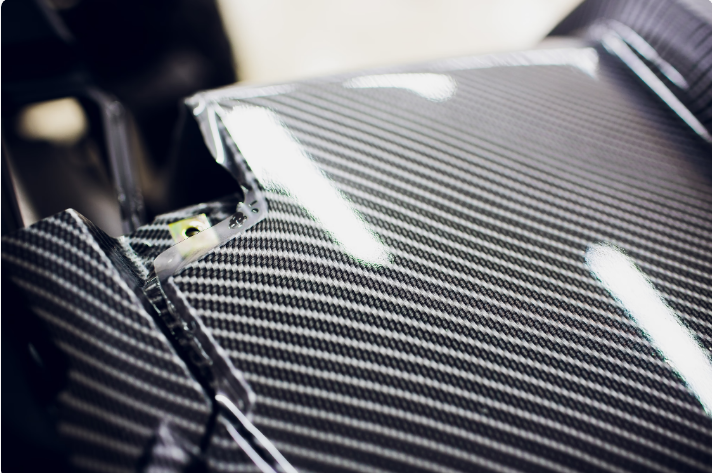


Crtint Specialty PPF is designed for standout finishes, offered in Carbon Gloss, Carbon Matte, Black Gloss, and Black Matte. Built for both style and strength, it combines a distinctive visual appeal with advanced durability. Its self-healing technology protects against chips, scratches, and everyday wear, while enhancing your vehicle’s look with a refined textured or rich deep-black finish.
Carbon Gloss PPF
Crtint Carbon Gloss PPF brings the striking appeal of carbon fiber with a smooth, high-gloss finish. Engineered with advanced self-healing properties, it protects against rock chips, scratches, and environmental damage while giving your vehicle a dynamic, motorsport-inspired look.
Carbon Matte PPF
Crtint Carbon Matte PPF delivers the bold character of matte carbon fiber with superior paint protection. Its non-reflective, textured finish adds a stealthy, aggressive style while shielding surfaces from daily wear, debris, and scratches.
Black Gloss PPF
Crtint Black Gloss PPF upgrades your vehicle with a deep, mirror-like black finish. Designed to resist chips, scratches, and UV exposure, it enhances color depth and shine while providing durable, long-term protection.
Black Matte PPF
Crtint Black Matte PPF offers a sleek, stealthy appearance with its refined matte black finish. Built for durability and impact resistance, it protects against surface damage while delivering a custom look with reliable self-healing performance.
At Crtint Performance Films, we go beyond supplying film — we provide confidence, proven performance, and dependable support.
What makes us different?
With decades of hands-on industry experience, we understand what truly performs in real-world conditions — because we’ve been in the field ourselves.
Every Crtint Performance Films product is crafted to deliver the perfect balance of protection, style, and long-term value, without cutting corners.
Our reputation is built on trust and relationships — offering honest guidance, fast delivery, and dedicated support at every stage.
We work closely with professional installers, architects, and business owners, helping you build your reputation with products you can rely on.
Choosing Crtint Performance Films means partnering with a brand that’s invested in your success — and committed to raising the standard of performance films for vehicles, buildings, and beyond.